

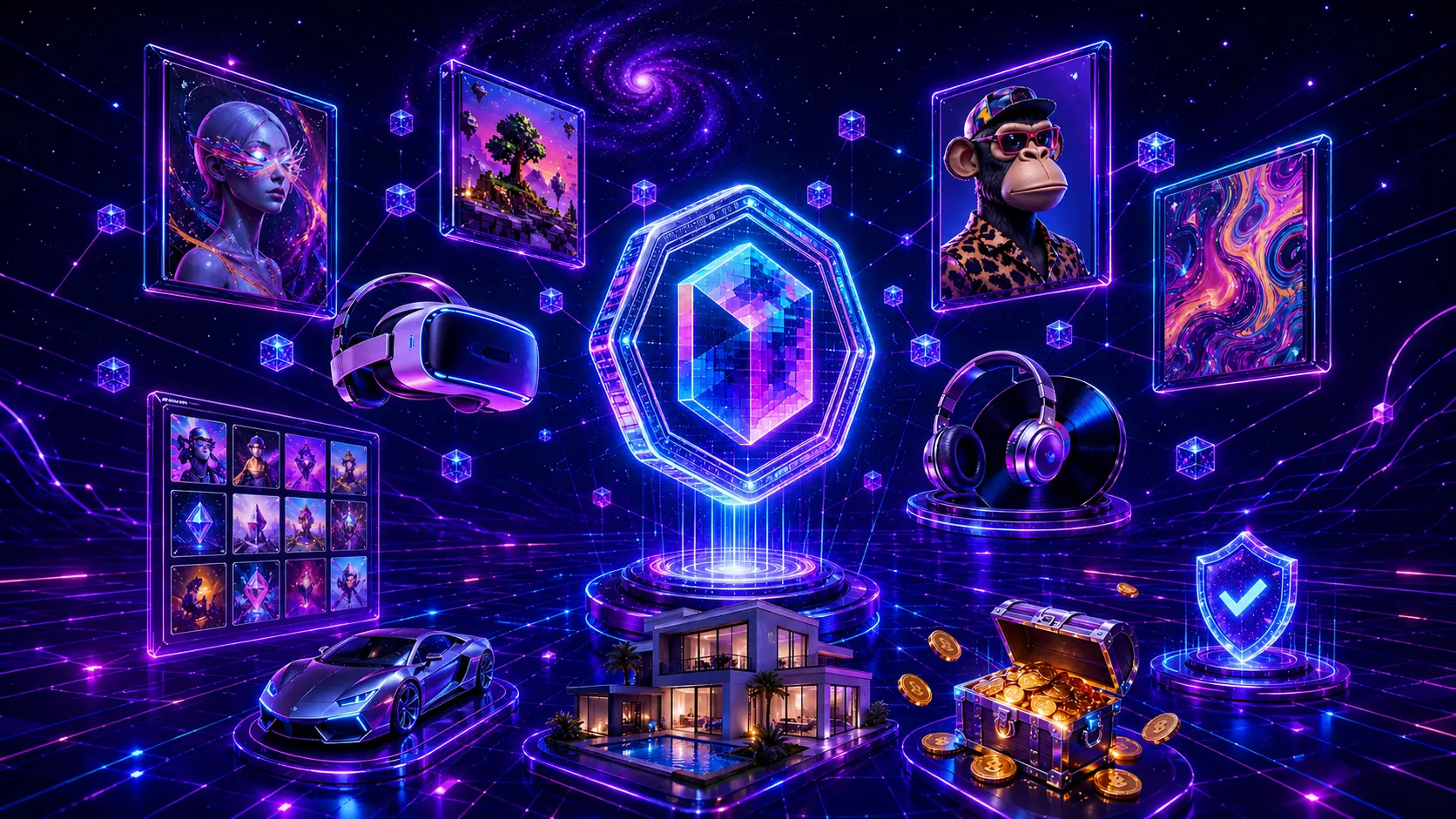
What Are NFTs? How They Work, Use Cases, and Future Trends
What are NFTs, and how do they work? Non-Fungible Tokens are unique blockchain-based digital assets that provide verifiable proof of ownership, authenticity, and transaction history. Created through minting, NFTs use smart contracts to define ownership, transfers, royalties, and marketplace activity. They can represent digital art, music, videos, gaming items, virtual real estate, collectibles, domain names, memberships, and other digital or real-world assets. This guide explains the main features and use cases of NFTs, including digital scarcity, creator monetization, global access, and transparent ownership records. It also examines major NFT risks such as price volatility, scams, fake collections, phishing, regulatory uncertainty, environmental concerns, and limited liquidity. Readers will also learn how NFT marketplaces, crypto wallets, and blockchains such as Ethereum, Solana, and Polygon support NFT trading. As Web3, gaming, the metaverse, and asset tokenization evolve, NFTs may play a growing role in digital ownership and the future of the online economy.
- Written
- Apr 12, 2026
- Revision
- Jul 30, 2026
- Views
- 297
- Author
- Matt Barnez
Comments (0)
Share your take on this PDF. New comments are reviewed before they appear.
No comments yet. Be the first to add your perspective.