

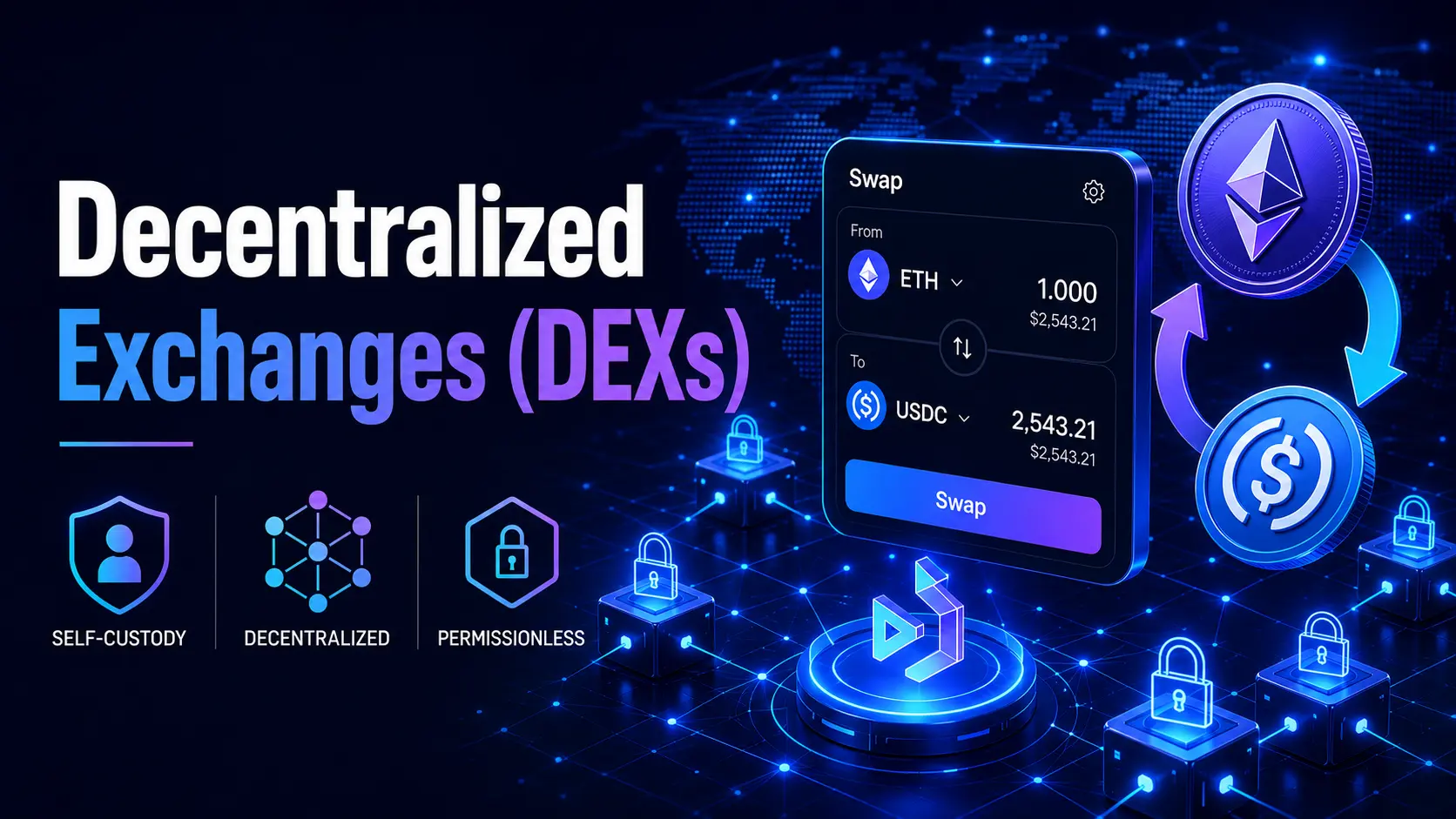
What Is a DEX? Decentralized Exchange Guide, Benefits & Risks
What is a decentralized exchange, and how does a DEX work? A decentralized exchange is a blockchain-based platform that allows users to trade cryptocurrencies directly from their wallets through smart contracts, without depositing funds with a centralized company. DEXs support self-custody, permissionless access, token swaps, liquidity pools, and transparent on-chain transactions. This guide explains how decentralized exchanges operate, how liquidity providers support trading, and how gas fees, slippage, token approvals, and blockchain confirmations affect each transaction. It also compares DEXs with centralized exchanges, highlighting differences in custody, privacy, accessibility, fiat support, and ease of use. Although DEXs give users greater control over their private keys and access to a wider range of tokens, they also involve risks such as smart contract exploits, fake tokens, malicious approvals, low liquidity, high network fees, and irreversible user mistakes. Evaluating audits, liquidity, fees, network support, reputation, and wallet security can help users choose and use a DEX more safely.
- Written
- Jun 7, 2026
- Revision
- Jul 30, 2026
- Views
- 297
- Author
- Matt Barnez
Comments (0)
Share your take on this PDF. New comments are reviewed before they appear.
No comments yet. Be the first to add your perspective.