BingX Crypto Exchange Review 2026
Introduction
Founded in 2018, BingX is a global crypto exchange offering spot trading, futures, copy trading, trading bots, and crypto buying options. The platform lists more than 1,000 digital assets, but its services, fees, and availability can vary by country and account-verification level.
This BingX review explains the platform’s main features, safety measures, KYC process, fees, copy trading tools, bots, and withdrawal risks. It is an informational guide, not investment advice.
What Is BingX?
BingX is a centralized crypto exchange. This means users can buy, sell, trade, deposit, and withdraw crypto through a platform-managed account.
The exchange is known mainly for futures trading, copy trading, and strategy tools. It also offers spot markets, P2P services, fiat purchase options through supported methods, and automated trading tools.
BingX may appeal to users who want several trading methods in one account. However, having more features does not automatically make the platform suitable for every user.
Before using BingX, users should check:
Whether BingX is available in their country.
Whether KYC is required for the features they need.
Which payment methods are available locally.
Whether they understand futures, copy trading, or bot risks.
Whether the withdrawal network is supported by the destination wallet.
Is BingX Safe?
BingX provides several account-security features, including Google 2FA, passkeys, withdrawal verification, anti-phishing tools, and account-risk controls.
These features can help reduce the risk of unauthorized access. However, they do not remove all risks associated with centralized exchanges.
When funds are held on BingX, the platform controls the private keys. This is different from holding crypto in a self-custody wallet, where the user controls the private keys directly.
A practical approach is to keep only the funds needed for trading on the exchange. Long-term holders may prefer to move unused assets to a personal wallet after checking network compatibility and withdrawal fees.
Users should also take basic security steps:
Use a unique password.
Enable Google 2FA or passkeys.
Turn on anti-phishing protection.
Avoid logging in through search-engine ads or unknown links.
Bookmark the BingX official website.
Test a small withdrawal before moving a larger amount.
BingX Proof of Reserves and Custody Risk
BingX publishes Proof of Reserves information and allows users to verify supported assets through a Merkle Tree system.
Proof of Reserves can be useful because it gives users a way to check whether certain exchange-held assets are represented in reserve data. However, Proof of Reserves should not be treated as a full financial audit or a guarantee that all exchange risks have disappeared.
Users should understand the difference between:
Proof that certain assets are held.
A full picture of liabilities.
Operational risk.
Regulatory risk.
Account-access risk.
Personal wallet custody.
Proof of Reserves is a transparency tool. It is not a replacement for good personal security practices or careful risk management.
Regulation, Country Access, and Risk
BingX is a global platform, but availability is not identical in every jurisdiction.
Some countries or regions may face restrictions because of sanctions, local regulations, compliance requirements, or internal risk policies. Access can also vary by product.
For example, a user may be able to access the website but still face limits on:
Identity verification.
Fiat purchases.
P2P trading.
Futures trading.
Promotions.
Withdrawals.
Account recovery.
Users should not attempt to bypass regional restrictions by using false information, another person’s account, or misleading identity documents. This can create account restrictions and make future withdrawals more difficult.
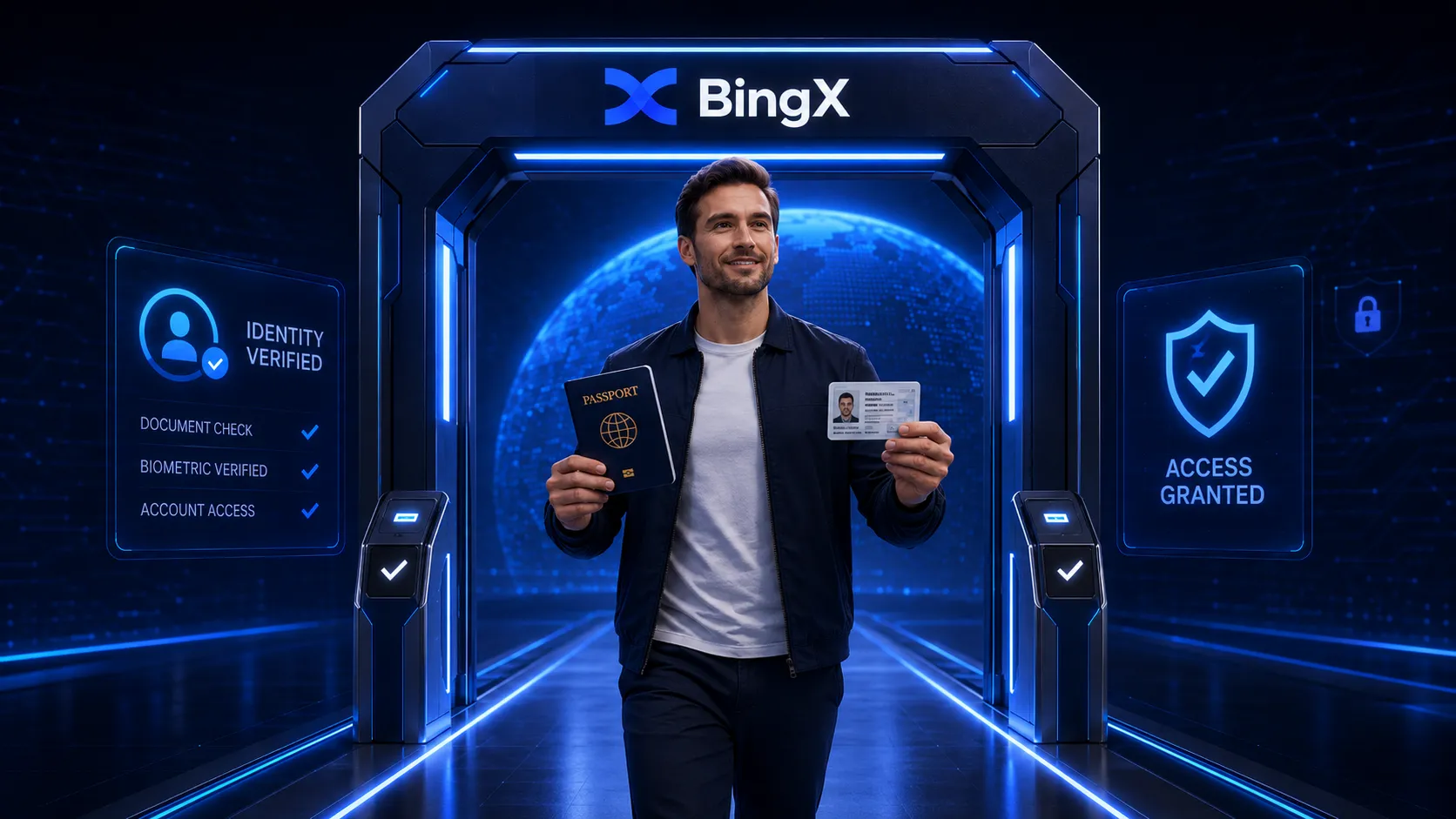
BingX KYC: Is Verification Required?
BingX KYC can affect the features available in an account.
Depending on current rules and location, KYC may affect:
Deposit access.
Withdrawal limits.
CoinEx P2P-style fiat services such as BingX P2P.
Fiat payment options.
Copy trading access.
Spot and futures access.
Promotions and events.
Account recovery and security reviews.
An unverified account may face lower withdrawal limits or limited access to some products. Advanced verification can unlock higher limits and broader functionality.
The verification process may require identity documents, facial verification, and additional information in certain cases.
KYC rules are time-sensitive. Users should complete verification before depositing a large amount, especially if they expect to use P2P, fiat payments, or large withdrawals.
BingX Trading Features
BingX offers several ways to trade or gain market exposure. Each product has different risks.
Spot Trading
Spot trading lets users exchange one crypto asset for another.
For example, a user can trade USDT for BTC or ETH through a spot trading pair. There is no liquidation in basic spot trading because the user owns the asset they purchase.
However, spot trading still involves price volatility. An asset can fall in value after purchase.
Futures Trading
BingX also offers futures and perpetual contracts.
Futures can allow users to use leverage and open long or short positions. This makes the product more complex than spot trading.
Leverage can amplify gains, but it can also amplify losses. A position may be liquidated if the market moves against the user and the account does not have enough margin.
Futures are not suitable for users who do not understand leverage, funding fees, liquidation prices, and margin requirements.
Copy Trading
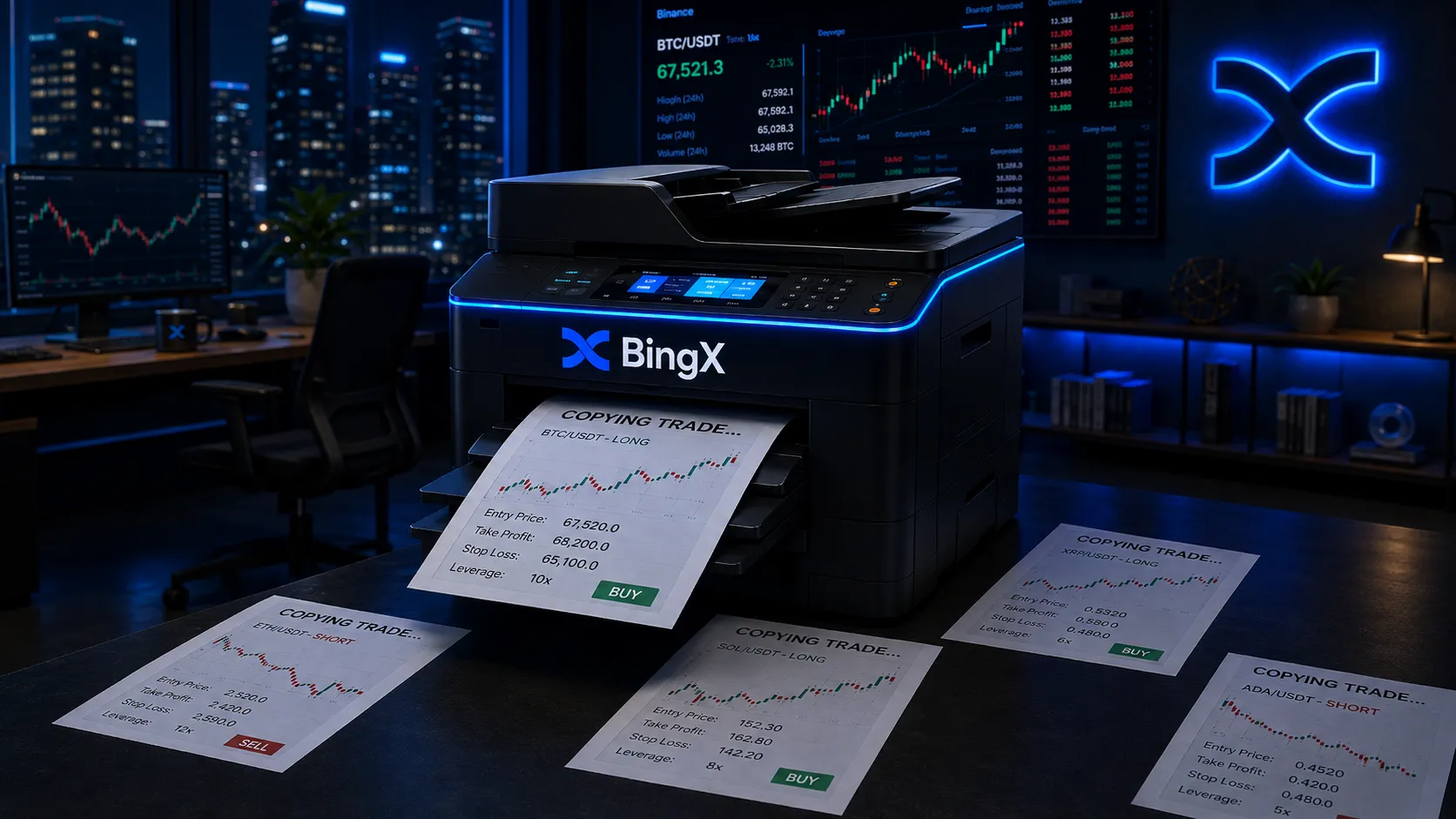
Copy trading is one of BingX’s most visible features.
It allows users to follow selected traders and automatically replicate their trades based on chosen settings. BingX offers both futures copy trading and spot copy trading.
This can look easier than trading manually, but it still carries real risk.
A trader with a high recent return may have used high leverage, taken large risks, or experienced a short period of good market conditions. Past results do not guarantee future performance.
Before copying a trader, users should review:
Drawdown.
Trading history.
Number of followers.
Assets under management.
Risk level.
Use of leverage.
Profit-sharing terms.
Maximum copy amount.
Stop-copy conditions.
BingX Trading Bots
BingX also provides automated strategy tools, often called trading bots.
Current bot categories can include:
Spot Grid.
Futures Grid.
Spot Infinity Grid.
Futures Martingale.
Signal strategies.
A trading bot follows predefined rules. It does not predict the market or remove risk.
For example, a grid bot may place buy and sell orders within a defined price range. It can work differently in sideways markets than in strong uptrends or sharp declines.
A bot can continue following its rules even when market conditions change. Users should understand the strategy settings, risk level, price range, fees, and stop conditions before using one.
A bot should not be treated as passive guaranteed income.
BingX Fees and Costs
BingX fees depend on the product being used.
A user may face costs from:
Spot trading fees.
Futures trading fees.
Futures funding payments.
Copy trading profit-sharing arrangements.
Withdrawal fees.
Payment-provider fees.
P2P price differences.
Network fees.
Spread on fiat purchases.
Standard spot trading fees for some major pairs are commonly published around 0.1% for makers and takers, but actual costs can vary by asset, user level, promotion, and current BingX fee schedule.
Futures fees also vary by contract and account level. In addition to trading fees, perpetual futures traders may pay or receive funding payments.
Users should not focus only on a visible “low fee” label. The real cost can also include spread, slippage, network fees, and the final price received.
Before confirming any transaction, check:
The direct trading fee.
The network or withdrawal fee.
The final amount you will receive.
The payment-provider quote.
Any copy-trading profit-sharing terms.
The live BingX fee schedule.
Buying Crypto on BingX
Users may be able to buy crypto on BingX through different routes.
BingX P2P
BingX P2P allows users to buy or sell crypto with other users using supported payment methods.
P2P can be useful for users who need local fiat payment options. However, it requires extra care because another person is involved in the transaction.
Never release crypto based only on:
A screenshot.
A payment notification.
A message from the buyer.
A promise that payment is coming.
Always check your own payment account before confirming that money has arrived.
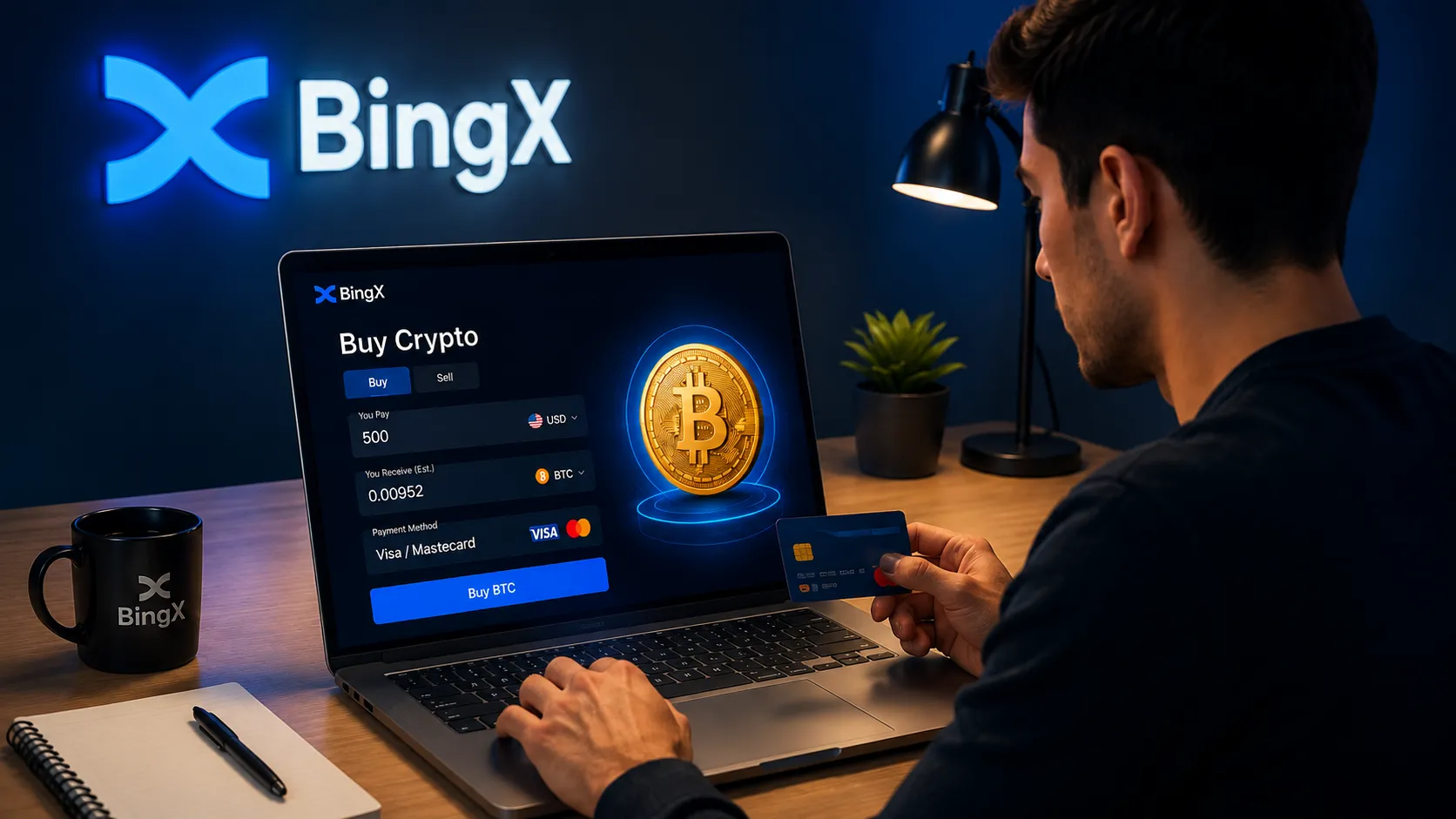
Card or Payment-Provider Purchases
BingX may offer supported third-party payment options, such as card purchases or local payment methods.
These services can be convenient, but the payment provider may set its own:
Fees.
Exchange rate.
KYC requirements.
Order limits.
Processing time.
Country restrictions.
Users should compare the final crypto amount received, not only the visible fee percentage.
Spot Trading After Deposit
Users who already hold crypto can deposit it into BingX and exchange it through spot trading.
This method can be useful for users who already own USDT, BTC, ETH, or another supported asset.
Deposits and Withdrawals
Deposits and withdrawals are among the most important parts of using a crypto exchange.
Before depositing crypto to BingX, users should confirm:
The coin is supported.
The chosen network is supported.
The deposit address is correct.
A memo or tag is included when required.
The amount meets the minimum deposit requirement.
The same caution applies to withdrawals.
For example, USDT may be sent through several networks. Sending USDT using the wrong network can lead to delays, recovery requests, fees, or permanent loss.
A withdrawal may pass through several stages:
Email confirmation.
Security review.
Processing.
Blockchain broadcast.
Network confirmations.
Destination exchange credit.
A TxID is usually created after the withdrawal has been broadcast to the blockchain. If the destination platform has not credited the funds yet, users should check the TxID, network, address, memo/tag, and required confirmations.
Withdrawal fees can change with network conditions. Users should check the live withdrawal page before sending funds.
BingX Pros and Cons
Pros | Cons |
|---|---|
Offers spot, futures, copy trading, and bots in one platform | Product availability can vary by country |
Supports a large selection of crypto assets | Futures and copy trading involve substantial risk |
Provides account-security tools such as 2FA and passkeys | Holding funds on an exchange creates custody risk |
Includes Proof of Reserves tools for supported assets | Fees, spreads, and promotions can change |
Offers P2P and fiat-related buying options in some regions | Wrong-network transfers can be difficult to recover |
Has automated trading tools for users who understand strategy settings | Bots do not guarantee profit or protect against market losses |
Conclusion
BingX is a feature-rich crypto exchange with spot trading, futures, copy trading, P2P services, and automated strategy tools.
Its main strengths are the variety of products available in one account and its strong focus on copy trading and bots. However, these tools also make the platform more complex than a simple buy-and-hold crypto service.
Users should check local availability, complete KYC where needed, secure their account, review live fees, and test deposits or withdrawals with a small amount before using larger balances.
This article is for educational purposes only. It is not financial advice, and it is not a recommendation to trade, hold funds, copy traders, or use leverage on BingX.