Bitso Fees 2026: Trading Fees, Deposit Costs, Withdrawal Charges & Limits Explained
Understanding cryptocurrency exchange fees is essential before choosing a trading platform. Even exchanges with simple interfaces and strong security can become expensive if users do not understand trading commissions, deposit costs, withdrawal charges, and transaction limits.
Bitso is one of the most popular cryptocurrency exchanges in Latin America, offering crypto trading, fiat deposits, and withdrawals through regional payment methods.
But how much does Bitso really cost in 2026?
This complete Bitso fees review explains everything users need to know about:
Bitso trading fees
Maker and taker commissions
Deposit costs
Crypto withdrawal fees
Fiat withdrawal charges
Transaction limits
Hidden costs
Ways to reduce Bitso fees
The goal is to help users understand whether Bitso is an affordable crypto exchange compared with other platforms.
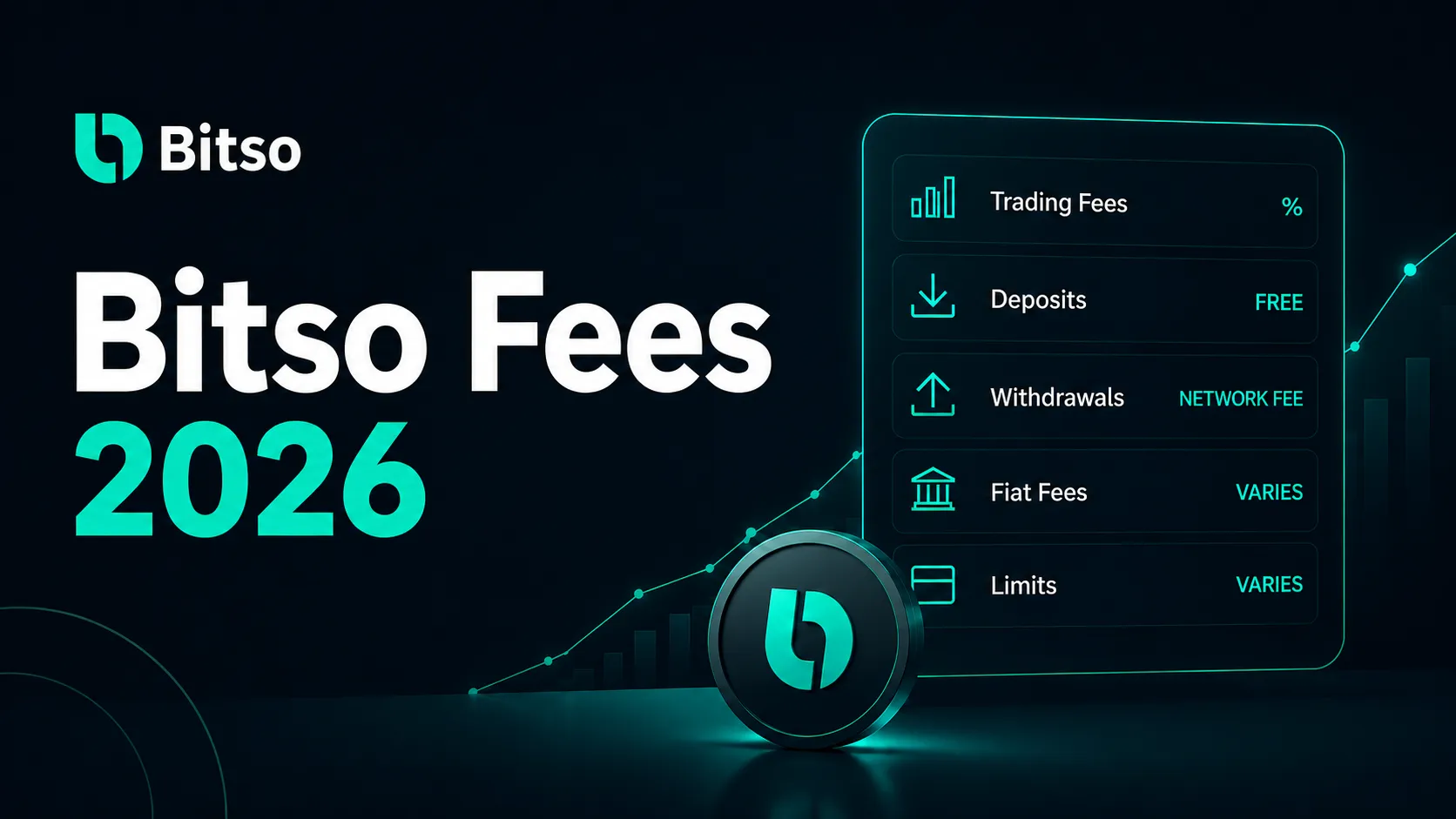
Bitso Fees Overview 2026
What Types of Fees Does Bitso Charge?
Like most centralized cryptocurrency exchanges, Bitso uses several types of fees depending on the service.
The main Bitso fees include:
Trading fees
Crypto withdrawal fees
Fiat transaction fees
Network-related blockchain fees
Conversion spreads
Some services may be free depending on the country, currency, and payment method used.
Bitso Fee Structure Summary
Fee Type | Cost |
|---|---|
Trading Fees | Maker-taker model |
Crypto Deposits | Usually free |
Crypto Withdrawals | Depends on asset and network |
Fiat Deposits | Depends on country and method |
Fiat Withdrawals | Depends on country and method |
Account Fee | No regular account fee |
Bitso Trading Fees 2026
How Does Bitso Charge Trading Fees?
Bitso uses a maker-taker fee model.
This means trading fees depend on whether your order:
Adds liquidity to the market (Maker)
Takes existing liquidity from the order book (Taker)
Maker orders generally receive lower fees because they help create liquidity, while taker orders usually pay slightly higher fees because they execute immediately.
Bitso Maker and Taker Fees
Bitso trading fees vary depending on:
Trading pair
30-day trading volume
Market type
For MXN trading pairs, lower-volume users may pay higher fees, while users with larger trading volumes receive reduced rates.
Example fee structure:
30-Day Trading Volume (MXN) | Maker Fee | Taker Fee |
|---|---|---|
Less than 20,000 MXN | 0.600% | 0.780% |
Over 100,000 MXN | 0.570% | 0.741% |
Over 1,000,000 MXN | 0.550% | 0.715% |
Over 50,000,000 MXN | 0.200% | 0.260% |
Over 150,000,000 MXN | 0.100% | 0.130% |
The exact fee depends on the user's trading volume and the market being used.
Bitso Spot Trading Fees Explained
Example: Buying Crypto on Bitso
Assume a user buys $1,000 worth of Bitcoin.
If the trading fee is 0.78%:
Trading amount: $1,000
Trading fee: approximately $7.80
Total cost: $1,007.80
Higher-volume traders can reduce this cost because Bitso provides lower fee tiers.
How to Reduce Bitso Trading Fees
Users can reduce trading costs by:
Increasing Trading Volume
Bitso provides lower fees for higher-volume traders.
Using Limit Orders
Limit orders may qualify as maker transactions because they add liquidity to the order book.
Avoiding Frequent Small Trades
Many small transactions can create unnecessary trading costs over time.
Bitso Deposit Fees 2026
Are Bitso Deposits Free?
Deposit costs depend on the method and region.
For many cryptocurrency deposits, Bitso does not charge an additional platform fee. However, users may still pay blockchain network fees when sending crypto from another wallet.
Crypto Deposit Fees
Cryptocurrency deposits are generally free from Bitso's side.
Examples:
Bitcoin deposits
Litecoin deposits
Dogecoin deposits
Other supported cryptocurrencies
The sender may still pay blockchain transaction fees.
Fiat Deposit Costs
Fiat deposit fees depend on:
Country
Banking method
Currency
For example, certain bank transfer methods may have different pricing depending on the user's location.
Users should always check available deposit methods before transferring funds.
Bitso Withdrawal Fees 2026
Crypto Withdrawal Fees
Crypto withdrawal fees depend on:
Cryptocurrency
Blockchain network
Network congestion
When withdrawing crypto, users usually pay a network-related cost because transactions require blockchain processing.
Bitso displays applicable withdrawal fees before users confirm transactions.
Examples of Crypto Withdrawal Costs
Withdrawal costs can vary significantly:
Bitcoin Withdrawals
Bitcoin withdrawals may require higher fees during periods of network congestion.
Ethereum and ERC-20 Tokens
Ethereum-based withdrawals can become more expensive when network activity increases.
Low-Cost Networks
Assets operating on faster and cheaper networks may have lower withdrawal costs.
Bitso Fiat Withdrawal Fees
Bank Withdrawal Costs
Fiat withdrawal fees depend on the user's country and banking system.
Some regional bank transfers may have low or no fees, while international transfer methods may involve additional charges.
Withdrawal Processing Time
Withdrawal speed depends on:
Currency
Banking partner
Country
Verification status
Local transfers are usually faster than international payment methods.
Bitso Hidden Fees: Are There Extra Costs?
Does Bitso Have Hidden Fees?
Bitso does not charge traditional account maintenance fees, but users should consider possible indirect costs.
These may include:
Trading spread
Blockchain network fees
Fiat transfer charges
Conversion differences between currencies
Understanding Spread Costs
A spread is the difference between the buying price and selling price of an asset.
For example:
Market price of BTC: $60,000
Bitso buying price: $60,100
The difference represents part of the trading cost.
Users comparing exchanges should evaluate both official fees and the final execution price.
Bitso Limits 2026
Does Bitso Have Trading Limits?
Bitso limits depend on:
Verification level
Country
Payment method
Account type
Higher verification levels usually provide access to larger transaction amounts.
Deposit Limits
Deposit limits vary based on the payment method.
Some transfer methods may have minimum or maximum amounts.
For example, certain transfer services have specific minimum transaction requirements and limits depending on account type.
Withdrawal Limits
Withdrawal limits depend on:
Asset type
Account verification
Destination method
Users should check their account limits before making large transactions.
Bitso Fees Compared With Other Exchanges
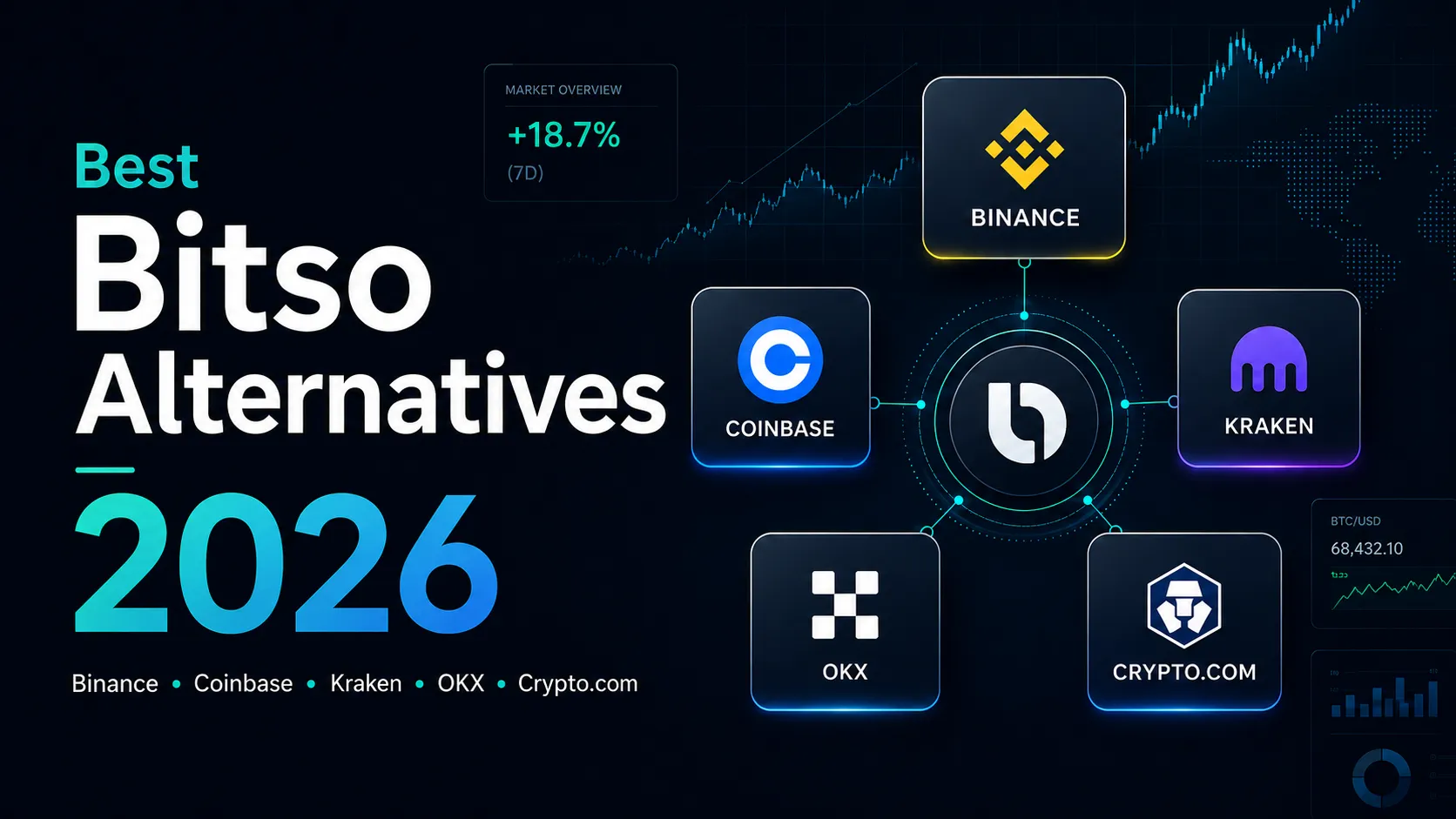
Bitso vs Binance Fees
Binance is generally known for very competitive trading fees, especially for high-volume traders.
Advantages of Binance:
Lower base trading fees
More trading pairs
Volume discounts
Advantages of Bitso:
Better regional payment support
Easier access for Latin American users
Bitso vs Coinbase Fees
Coinbase is often considered beginner-friendly but may have higher fees depending on the transaction type.
Bitso may be more cost-effective for users using local currencies in supported Latin American markets.
Bitso vs Kraken Fees
Kraken offers competitive trading fees, especially through its professional trading platform.
Bitso may be more convenient for users who prioritize regional banking connections.
Is Bitso Expensive in 2026?
Bitso Fee Evaluation
Bitso fees are competitive for its target market, but the platform is not always the cheapest option globally.
Bitso Advantages
Local currency support
Free crypto deposits in many cases
Volume-based trading discounts
Simple fee structure
Bitso Disadvantages
Higher fees for low-volume traders
Fewer trading pairs compared with global exchanges
Possible spread costs
How to Save Money on Bitso
Use Higher Volume Trading
Higher trading volume can unlock lower fee tiers.
Compare Trading Pairs
Different markets may have different fee structures.
Choose Efficient Networks
When withdrawing crypto, selecting lower-cost networks can reduce expenses.
Avoid Unnecessary Conversions
Repeatedly converting between currencies can create additional costs.
Final Verdict: Are Bitso Fees Worth It in 2026?
Bitso provides a relatively transparent fee structure with trading commissions, transaction costs, and limits clearly defined for users.
The platform is not necessarily the cheapest exchange worldwide, especially for high-frequency traders comparing global platforms.
However, for Latin American users who value local currency support, convenient banking options, and a simple crypto experience, Bitso fees can be reasonable.
Overall:
Beginners: Good fee experience
Latin American users: Strong value
Professional traders: May find cheaper alternatives
Bitso remains competitive because its value comes not only from low fees but also from regional accessibility and convenience.